
Active And Passive Learning: Which One Is Better?
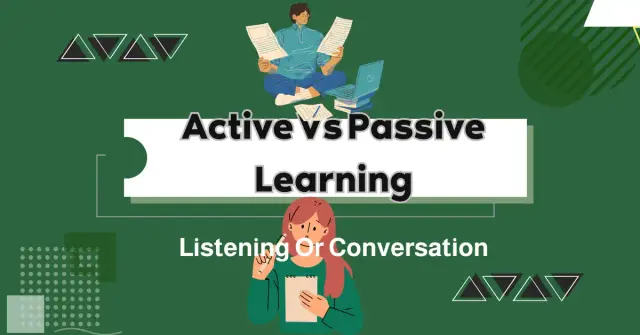
Ever wonder why some folks pick up languages super quick? How you learn makes a big difference. Today we'll be exploring two ways people often learn are by doing (active) and by watching/listening (passive). As far as you are concerned, which one really helps you nail a language? Did have any experience with one of them? We'll check out both ways, what's cool about them, and how you can use them to learn faster and better. Ready?
What's Active Learning?
Active learning means you're really getting involved. Instead of just reading or hearing stuff, you're diving in ,it means that you need to be fully engaged and active in every step of learning process . You might:
- Talk or write in the new language.
- Do exercises or quizzes.
- Try to explain things to someone else.
- Use flashcards to remember stuff.
Active learning makes your brain work to remember and use what you're learningm just engage in the learning operation. That helps you get it and remember it better, like Shadowing and Spaced Repetition techniques, these going to help you interact with whole process of language learning.
Why Active Learning Rocks
- You remember more: Studies show you remember stuff better when you actually use it.
- You get better at figuring things out: Using the language in real situations makes you quicker on your feet, and you'll be handling conversation easily.
- You get more confident: Talking and writing regularly helps you feel less scared to try, that's so true because it's going seet you free.
Like, say you're learning Spanish. Writing a few sentences every day, working on how you say things, and chatting with someone or with AI will help you talk naturally way faster than just listening to Spanish radio, right or not?.Immerse, blend yourself with learning stuffs and be the be the monitor.
What's Passive Learning?
Passive learning , aptly named, is more about taking stuff in without doing much right away. You might:
- Listen to podcasts or music.
- Watch TV shows or movies in the language.
- Read stuff without taking notes.
- Watch how others talk.
This way gets you used to the language. It helps you understand and learn words, but it is not going to give you a strong push towards your goal. At a certain moment, you'll be passive to learn more and you may end up furstrated, and it doesn't make you use the language yourself.
Cool Things About Passive Learning
- You get exposed to the language: You get used to how it sounds, its rhythm, and how it's put together, this helps master the place of articulations.
- Easy to fit in your day: You can do it while doing other things, like driving to work. It's not going stop you from doing your things.
- You learn about the culture: Watching shows or reading stuff shows you how people actually use the language, and you undeerstand better why, when, and you say that sentence or phrace or even a word.
Like, if you're learning German, you could watch a show every day. You'll start to pick up words and phrases, but if you're not talking or writing ( not being active) , you won't get as good at using the language yourself.
Active Vs Passive : What's The Difference?
Both ways are good, but they help in different ways:
| Aspect | Active Learning | Passive Learning |
|---|---|---|
| Engagement | High, requires effort | Low, mostly observing |
| Retention | Strong, memory reinforced | Moderate, recognition-focused |
| Fluency | Improves speaking & writing | Mostly listening & reading skills |
| Time Efficiency | More demanding but faster results | Easier but slower results |
Basically, active learning helps you talk the talk, which great for someone who wants to master the language. Passive learning gives you the background and gets you used to the language, it is not going to take you so far.
How To Use Both To Get Most Out Of It
The best way is to do a bit of both:
- Start active: Practice every day by writing sentences, doing exercises, or talking with people/ AI Tools like Chatbot.
- Add passive: Listen to stuff, watch shows,TVs, Radio or read in the language.
- Go over things: Use flashcards or test yourself to remember new words.
- Try real stuff: Order food, chat with someone or even AI like ChatGPT, or write in a journal in the new language.
Doing both helps you learn better. Active learning makes you better at using the language, while passive learning helps you understand it better. If the saying holds true, one hand cannot clap.
Here's An Example
Meet Maria, who's learning English. She spends half an hour every day talking and writing( Active Method). Then she spends an hour watching YouTube videos or listening to songs( Passive Method). After a few months, she sees:
- She gets more of what's going on in shows.
- She talks more confidently.
- She remembers words better.
Maria's doing great because she uses both ways of learning, that's why two hands clap and one cannot.
Tips For Active Learning
- Talk out loud every day, even if it's just to yourself and record yourself to see your achievment
- Write a little bit about your day, short story if you can or sentences like a song or anything.
- Test yourself with flashcards.
- Teach someone else what you've learned, it's a refresh process that helps remember what you learnt.
- Again, record yourself talking to see how you're doing.
Tips For Passive Learning
- Pick stuff you like, like shows or music or series / movies.
- Keep a notebook for new words, Stikers help you access you words list easily.
- Listen to things again to hear how things are said.
- Watch how sentences are put together, try repeat them frequently.
- Don't do other things while you're listening or watching; pay attention.
Conclusion
Here's the hidden secret, active and passive learning aren't enemies; they're friends. Active learning helps you talk to yourself , start a conversation, write, and understand. Passive learning gives you the background, gets you used to the language, and helps you listen. Doing both together helps you learn faster and really get the language get them together to reach the real level you looking for.
Have you tried mixing active and passive learning? What worked best for you? Give it a shot and see how it changes things for you.
Post a Comment